

Top 10 Advantages of FRP Composite Grating Floor Panels: Corrosion-Resistant, Durable, Lightweight
Nowadays, FRP composite grating floors are gradually becoming the top choice in industrial, civil construction, and infrastructure projects due to their superior advantages in durability, lightweight, corrosion resistance, and versatility. With the development of new materials, this floor panel not only effectively replaces traditional steel grating but also opens up the trend of using composite materials in many fields that require high technical standards.
Overview of FRP Composite Grating Floor Panels
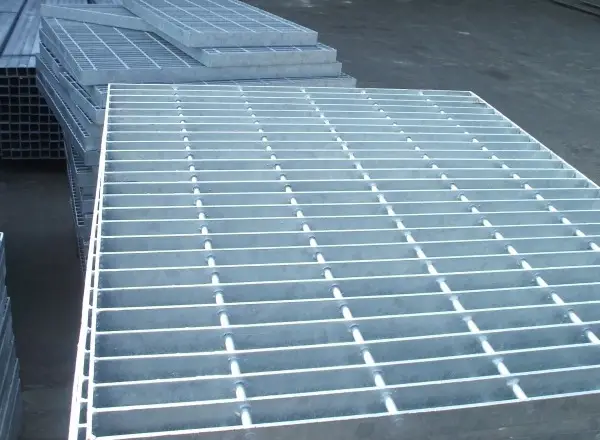
FRP composite grating floor panels offer a perfect solution to replace metal floors that are prone to corrosion and degradation under various environmental conditions. Before delving into the advantages and applications of this product, let's explore its composition, basic properties, and why more and more businesses are choosing it for their projects.
Composition and Components of FRP Composite Grating Floor Panels
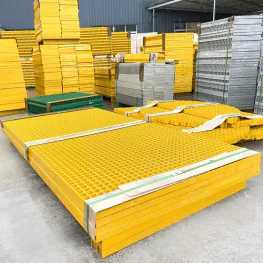
FRP composite grating floor panels are primarily made from fiberglass combined with premium polyester or vinyl ester resin, through a modern molding process.
Fiberglass acts as the reinforcing core, increasing the floor's load-bearing capacity and enhancing its mechanical stability. Meanwhile, the composite resin layer protects the fiberglass from environmental impacts and provides water, chemical, and UV resistance.
The combination of these two components gives the floor panel a significantly lighter weight compared to steel while maintaining high durability, excellent elasticity, and a long service life.
Moreover, depending on usage requirements, the FRP composite grating floor panels can be designed with different mesh hole sizes to allow water drainage, reduce weight, or increase anti-slip properties by adding a textured surface coating.
Outstanding Advantages Compared to Traditional Grating
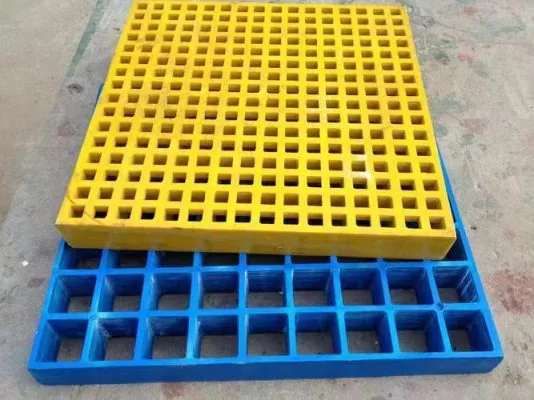
One of the biggest advantages of FRP composite grating floor panels is their almost absolute corrosion resistance in acidic, alkaline, seawater, or chemical environments.
In contrast, steel grating, even if galvanized or coated, still suffers from rust over time, especially when exposed to damp environments or chemicals. This increases maintenance and replacement costs and affects structural safety.
Additionally, due to its weight being only about 1/3 to 1/4 of steel, transporting and installing FRP composite grating floor panels is much easier, saving labor costs and installation time.
Moreover, composite materials are electrically insulating, do not conduct heat strongly, and contribute to safety in environments that are prone to fire or require high electrical insulation.
Why Choose FRP Composite Grating Floor Panels?
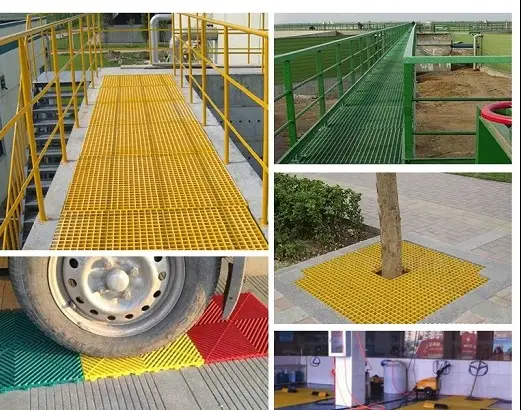
It can be said that FRP composite grating floor panels combine all the essential qualities of “durability – lightness – safety – cost-effectiveness,” making them the optimal flooring solution for modern construction projects.
By eliminating the issues caused by rust, businesses can significantly reduce long-term maintenance costs while maintaining the original appearance and safety of the structure.
This product also contributes to improving work efficiency and reduces the load on the overall supporting structure of the project due to its lightweight, opening up more creative and flexible design options compared to traditional materials.
Outstanding Advantages of FRP Composite Grating Floor Panels
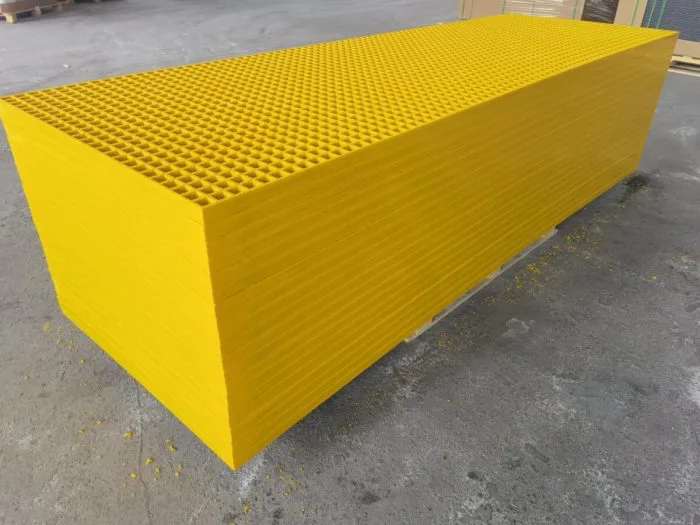
FRP composite grating floor panels are not just a replacement for steel floors; they have many outstanding advantages that make them an ideal choice in a wide range of practical applications. Below is a detailed analysis of the most notable benefits of this new material.
Mechanical Strength and Long Service Life
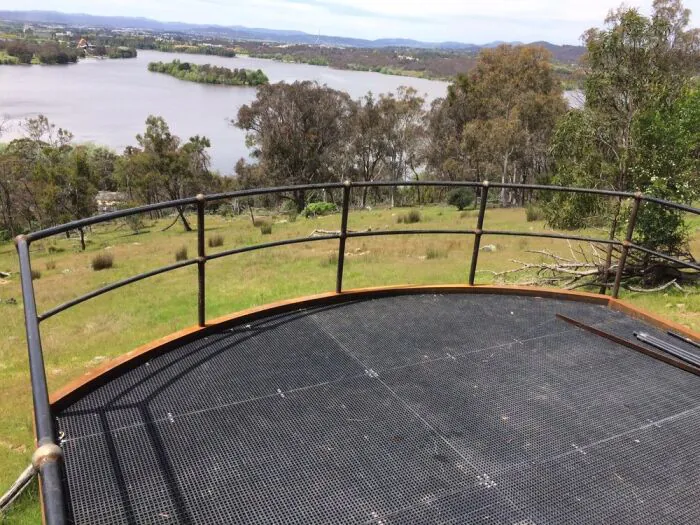
The load-bearing capacity of FRP composite grating floor panels is impressive thanks to the woven fiberglass structure embedded within the resin matrix.
This product can bear loads equivalent to or even exceed traditional steel floors while maintaining its lightweight design, reducing the load on the overall structure of the project.
Moreover, composite materials are less affected by weather factors such as temperature, humidity, or UV radiation, helping maintain mechanical strength even after years of outdoor use or in harsh environments.
According to practical studies, the average lifespan of FRP composite grating floor panels can reach 30-50 years without the need for coating or complicated maintenance, far surpassing conventional metal grating floors.
Therefore, investing in this type of flooring provides long-term economic benefits, minimizing repair and replacement costs over its lifecycle.
Excellent Corrosion Resistance and Chemical Resistance
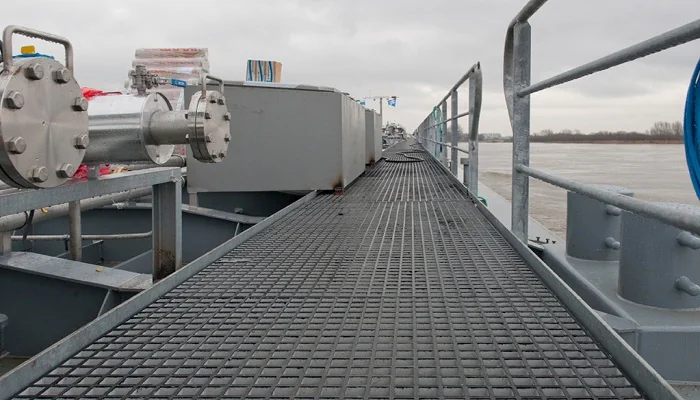
One of the standout features of FRP composite grating floor panels is their almost absolute corrosion resistance in harsh working conditions.
The composite material can withstand the effects of seawater, acid, alkali, oil, grease, and organic solvents without losing its mechanical properties or surface deformation.
This makes it an ideal choice for chemical plants, oil refineries, food processing plants, wastewater treatment systems, or coastal projects, offshore oil rigs.
Thanks to its excellent chemical resistance, the floor panel also resists rotting and does not require frequent protective coatings, significantly reducing the overall operating costs of the system.
In addition, FRP composite materials are non-magnetic, making them suitable for environments that require strict electromagnetic field control, such as laboratories, radar stations...
Lightweight, Easy to Install and Maintain
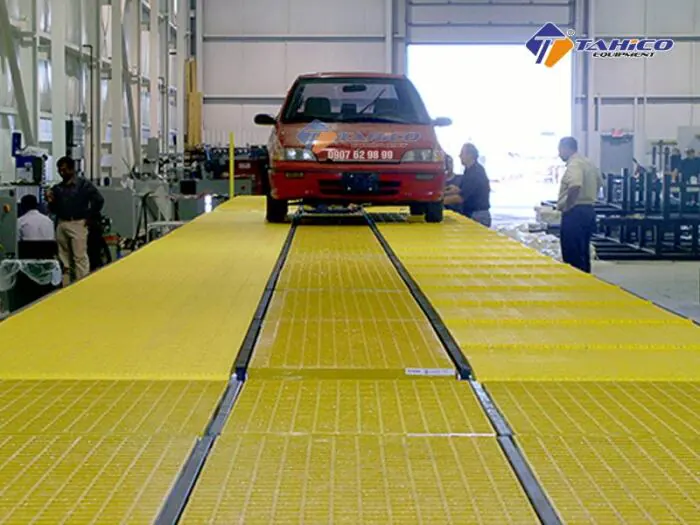
Weighing only about 1/3 of steel, FRP composite grating floor panels are extremely convenient for transportation, installation, and removal.
Installation does not require heavy lifting equipment, reducing labor costs and speeding up the construction process.
Furthermore, thanks to its modular design, replacing individual panels when damaged is flexible, without needing to dismantle the entire floor system.
The composite surface also helps reduce dust accumulation, is easy to clean or wash, meeting the strict hygiene requirements in the food, medical, or clean industries.
The stability of the material also helps reduce shrinkage or thermal expansion, minimizing cracks and warping during long-term use.
Safe for People and Environmentally Friendly
Another advantage of FRP composite grating floor panels is their electrical insulation, which ensures safety for workers in environments prone to fires or requiring high electrical insulation.
Additionally, FRP composite materials have a high melting point, excellent fire resistance, and some types are enhanced with fire-retardant additives, improving fire safety.
The production process of this material also generates minimal hazardous waste, and it can be recycled or easily disposed of at the end of its service life, contributing to reducing environmental impact.
The material does not contain heavy metals or harmful compounds, does not pollute water or air under normal usage conditions, and meets international safety standards and sustainable development trends.
Common Applications of FRP Composite Grating Floor Panels in Practice
Thanks to its many outstanding advantages, FRP composite grating floor panels are increasingly being applied in many industries and fields. They not only effectively replace metal floors but also expand their range of use due to their superior features.
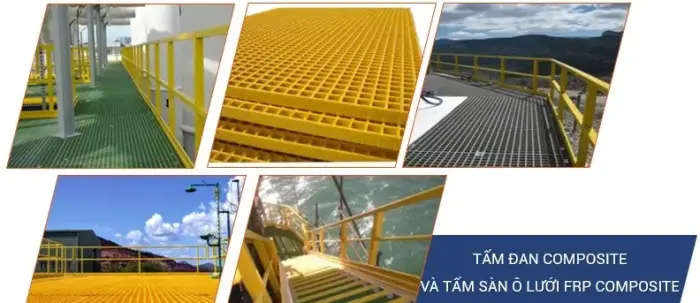
Chemical, Oil & Gas, and Water Treatment Industries
In chemical plants, oil refineries, or wastewater treatment systems, working conditions are harsh, with environments frequently exposed to corrosive chemicals and toxic solvents.
Using FRP composite grating floor panels ensures high service life and safety for working floors, technical walkways, and equipment supports.
The product is resistant to acid, alkali, seawater, or organic solvents, ensuring stable operation and reducing maintenance costs.
Moreover, the material's electrical insulation and fire-resistant properties enhance worker safety in hazardous or electrically sensitive areas.
Additionally, the lightweight design helps reduce the load on offshore platform structures, where weight plays a critical role in design and operation.
Food, Pharmaceutical, and Clean Industries
In food and pharmaceutical manufacturing plants, hygiene and contamination control are extremely strict.
The smooth surface of the FRP composite grating floor reduces dust buildup, is easy to clean, and is resistant to oxidation and rust, making it an ideal choice.
Its excellent corrosion resistance ensures the floor is not affected by strong cleaning or disinfecting solutions, prolonging its lifespan and reducing replacement frequency.
Additionally, FRP composite materials do not contain heavy metals or toxic substances, ensuring safety for the processing and packaging of products.
A clean production environment with no rust dust also improves product quality and meets strict food safety standards.
Transportation Infrastructure, Civil, and Public Systems
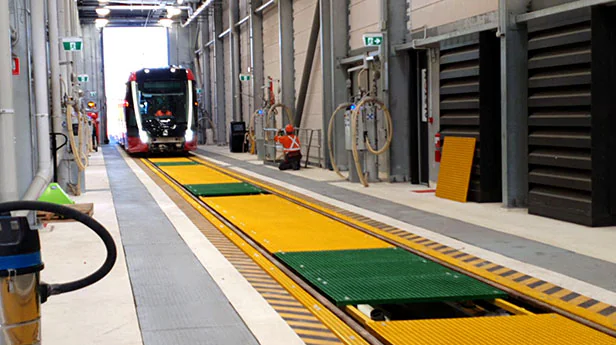
Not only limited to industrial applications, FRP composite grating floor panels are widely used in civil, urban infrastructure projects.
Pedestrian bridges, elevated technical walkways, railings, emergency stairs... all of these can use this material to reduce the overall load while ensuring durability.
Its corrosion resistance ensures that the floor remains durable and rust-free even when installed outdoors, by the coast, or in humid climates.
The anti-slip surface and easy-to-clean features help enhance safety and reduce accidents caused by slipping in public areas.
Furthermore, its high aesthetic appeal, diverse colors, and easy shaping make FRP composite grating floor panels an excellent material for interior and exterior decoration.
Special Applications: Shipbuilding, Electronics, and Special Projects
In the shipbuilding industry, FRP composite grating floor panels are widely used on ship decks, outdoor working floors, and storage tanks due to their seawater and corrosion resistance.
The electronics industry benefits from the electrical insulation and non-magnetic properties of FRP composite floors, using them in laboratories and factories producing components sensitive to electromagnetic fields.
Other special applications include emergency evacuation systems, military construction technical floors, radar stations, airports, and substations, where FRP composite grating is highly prioritized for its superior features.
As we can see, the range of applications for this material is continuously expanding, contributing to improving quality, safety, and reducing operational costs in various industries.
Important Considerations When Choosing and Installing FRP Composite Grating Floor Panels
Despite its many outstanding advantages, to fully exploit its effectiveness, businesses need to pay attention to several technical factors when choosing, designing, and installing FRP composite grating floor panels.
Determine the Correct Load Requirements and Size
The first important factor when choosing a floor panel is accurately determining the load that the floor will bear, including both static and dynamic loads.
Based on this specification, suppliers will advise on the appropriate fiberglass type, mesh density, thickness, and weaving pattern.
Correct selection ensures operational safety and prevents waste by choosing a floor that exceeds actual needs.
Additionally, the panel size, shape (square, rectangular, round), and edge style must be designed to fit the installation space and intended use.
It is essential to ensure that joints and connections are precise to ensure a tight fit, preventing sagging or shaking during installation and long-term use.
Select the Correct Resin Type and Surface Style for the Operating Environment
Next, choosing the right resin type in the composite is crucial.
If the operating environment is highly acidic or alkaline, vinyl ester resin should be prioritized over standard polyester to improve chemical resistance.
For high-temperature environments or fire hazards, choose resin with added fire-retardant additives to meet fire safety standards.
For the surface, depending on anti-slip or ease of cleaning requirements, rough, serrated, or glossy resin coatings can be selected to enhance aesthetics.
Correct selection will help extend the product’s service life and ensure maximum safety for users in real-world conditions.
Ensure Proper Training for Installation and Maintenance
An important consideration is that the installation team must be properly trained in handling composite materials to ensure high-quality installation.
Techniques like cutting, drilling, and bolting must use specialized tools to avoid damaging the internal reinforcing fibers.
Panels must be securely fastened to steel or concrete frames using appropriate accessories to prevent cracking at the anchoring points.
Additionally, panels should not be dropped from significant heights to prevent damage to the internal structure, maintaining durability and safety during use.
Following the correct installation process will maximize efficiency and minimize risks during maintenance and operation later on.
Periodic Maintenance and Cleaning to Maintain Durability
Although FRP composite grating floors are highly durable and corrosion-resistant, periodic cleaning and maintenance are essential to ensure long-term effectiveness.
Regularly check joints and fixed positions to detect any damage or cracking early.
Cleaning the surface can be done easily with clean water, soap, or mild detergents. Avoid using harsh chemicals that could degrade the resin base.
If cracks are found, contact the supplier for advice on suitable repair or replacement solutions to ensure safety during further use.
Frequently Asked Questions about FRP Composite Grating Floor Panels
Can FRP Composite Grating Floor Panels Fully Replace Steel Grating?
Yes, it can. With many advantages such as corrosion resistance, lightweight, electrical insulation, and high mechanical strength, FRP composite grating floor panels are gradually replacing steel grating in many applications, especially in chemical environments, coastal areas, or places requiring electrical insulation.
What is the Average Lifespan of FRP Composite Grating Floor Panels?
The average lifespan of this type of floor can reach 30-50 years, depending on environmental conditions and usage intensity. This is much higher than traditional steel floors.
Does FRP Composite Grating Floor Need Frequent Maintenance?
No complicated maintenance is required. Just regular cleaning and checking for any joint damage. If any issues are found, repair or replacement can be done, helping save on maintenance costs compared to steel.
Can FRP Composite Grating Floor Panels Be Used Outdoors?
Absolutely. With UV resistance, corrosion resistance, and good weather resistance, this product is ideal for use on overpasses, outdoor walkways, railings, boat decks, etc., without worrying about rust or fading.
Is the Cost of FRP Composite Grating Floor Higher Than Steel?
The initial cost may be slightly higher than steel, but when considering the total life cycle costs (long lifespan, low maintenance, easy installation), using FRP composite grating floor panels will be much more cost-effective in the long term.
https://xaydunghoabinh.com.vn/san-pham/san-grating-composite
Conclusion
In the trend of sustainable development and improving project quality, FRP composite grating floor panels stand out as the optimal choice due to their superior benefits: durability, lightness, corrosion resistance, electrical insulation, safety, and wide application.
Investing in this advanced material not only improves operational efficiency, reduces maintenance costs but also ensures environmental safety and worker health. We hope this article has helped you gain a comprehensive view to choose the most suitable flooring solution for your project.
IV. Contact
-
https://www.youtube.com/@Nap-ho-ga-song-thu-rac-Grating
-
Hotline: 0936629323