

How are White Iron and Grey Iron different?
How are White Iron and Gray Iron Different?
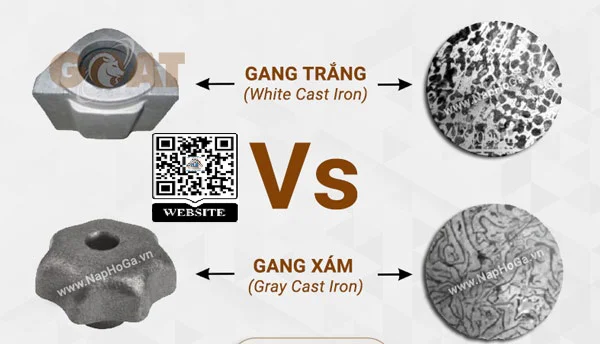
What are the differences between White Iron and Gray Iron? What are the composition and properties of White Iron and Gray Iron? Why are they different? Hoa Binh would like to send you the answers in the article below.
I. General introduction to gray iron and white iron
- Gray iron and white iron are two very common materials in industry.
- Gray iron and white iron have different properties and applications.
II. Concepts of gray iron and white iron
Gray iron
- Gray iron is an iron alloy containing carbon, silicon, and some other elements such as manganese, nickel, copper, chromium, etc.
- Gray iron is characterized by being tough, durable, having relatively high hardness, and good impact resistance.
- Gray iron has a distinctive gray color and high corrosion resistance.
- Gray iron is used to manufacture machine parts, mechanical components, automotive parts, etc.
White iron
- White iron is an iron alloy containing silicon and carbon but lacking other elements.
- White iron is characterized by being brittle, fragile, and having higher hardness than gray iron.
- White iron has a distinctive white color and poor impact resistance.
- White iron is used to manufacture machine parts such as gears, shafts, etc.
III. Distinguishing between gray iron and white iron
Distinguishing by observing color
- Gray iron has a characteristic gray color, while white iron has a characteristic white color.
- However, when corroded, gray iron can turn the dark brown or black color characteristic of rust, while white iron retains its white color.
Distinguishing by checking material properties
- Gray iron is tougher and has better impact resistance than white iron.
- White iron is brittle and more fragile than gray iron.
- The hardness of white iron is higher than gray iron.
Distinguishing by checking applications
- Gray iron is used to manufacture machine parts, mechanical components, automotive parts, etc.
White iron is used to manufacture machine parts such as gears, shafts, and other load-bearing components.
IV. Applications of gray iron and white iron
Applications of gray iron
- Gray iron is used to manufacture mechanical components such as engine blocks, crankshafts, gears, pistons, etc.
- In addition, gray iron is also used in the production of automotive parts such as steering shafts, clutch discs, etc.
- Gray iron is also used to manufacture ceramics, glassware, and other household items.
Applications of white iron
- White iron is used to manufacture load-bearing components such as shafts, gears, etc.
- In addition, white iron is also used in the production of artistic objects such as statues, decorative items, etc.
V. Manufacturing methods for gray iron and white iron
Applications of gray iron
- Gray iron is used to manufacture mechanical components such as engine blocks, crankshafts, gears, pistons, etc.
- In addition, gray iron is also used in the production of automotive parts such as steering shafts, clutch discs, etc.
- Gray iron is also used to manufacture ceramics, glassware, and other household items.
Applications of white iron
- White iron is used to manufacture load-bearing components such as shafts, gears, etc.
- In addition, white iron is also used in the production of artistic objects such as statues, decorative items, etc.
Gray iron manufacturing method
- The gray iron manufacturing method mainly includes 2 stages: iron production and heat treatment.
- In the iron production stage, the main raw materials are iron, coke, and auxiliary materials such as silicon, manganese, nickel, copper, chromium, etc.
- Then, the mixture of raw materials is put into a furnace and heated to a high temperature.
- In the heat treatment stage, the iron is put into a furnace and annealed at a high temperature to create toughness and good impact resistance for the iron.
White iron manufacturing method
- The white iron manufacturing method also includes 2 main stages: iron production and heat treatment.
- In the iron production stage, the main raw materials are iron and silicon.
- Then, the mixture of raw materials is put into a furnace and heated to a high temperature.
- In the heat treatment stage, the iron is put into a furnace and annealed at a high temperature to create high hardness for the iron.
Comparison table of the differences between White Iron and Gray Iron
| Comparison Content | White Iron | Gray Iron |
| Symbol according to TCVN | No symbol |
According to TCVN 1659-75, gray iron is symbolized by the 2 letters GX and the following two numbers indicate the minimum tensile strength and bending strength in KG/mm2 units. Example: GX15-32, Gray iron has a minimum tensile strength limit of 15KG/mm2 and a minimum bending strength limit of 32KG/mm2. |
| According to ASTM standard | ASTM A532 |
ASTM A48 (Below is the composition of gray iron ASTM A48 Class 40) |
|
Composition
|
Fe: 86% C: 3.3% Si: < 0.8% Mn: < 1.3% Cr: 2.5% Ni: 4% |
Fe: 92-94% C: 3.25 – 3.5% |
| Formation | This type of iron only forms when the C and Mn content is appropriate and under conditions of rapid cooling in thin, small castings. |
Quite easy to melt, with a low melting temperature (1260°C) and not requiring strict control of impurities. Low cost. |
| Density (kg/m3) | ~ 7770 kg/m3 | ~ 7150 kg/m3 |
| Brinell Hardness | 470 HB | 235 HB |
| Properties | Hard and brittle. Cannot be machined. Cannot be welded. Poor cutting properties, so only used as casting material. |
Graphite structure is softer than white iron, so it can be machined. Can be welded. Gray iron is brittle, has poor bending resistance, cannot be forged, and must be cast. When cooled quickly in the mold, the iron turns white, making mechanical processing very difficult. Low strength, toughness, and ductility. However, gray iron increases the wear resistance of the iron and reduces shrinkage when casting. Suitable for materials requiring lubrication containing oil and grease. Suitable for manufacturing sliding bearings, gears, engine bodies, machine beds, water pipes, etc. |
| Microstructure | Carbon is in the form of the compound Fe3C (cementite). | Most of the carbon is in the form of plate-like graphite. The matrix of gray iron can be ferrite, pearlite – ferrite, or pearlite. |
| Uses |
Hardly used in mechanical production. Mainly used for steel refining, manufacturing malleable iron or machine parts requiring high wear resistance such as grinding balls and rolling shafts. Applications in: Grinding, crushing, milling, and processing abrasive materials. |
Manufacturing components subject to small loads and infrequent impacts such as engine bodies, machine beds, water pipes, etc. Applications in: Internal combustion engine cylinders, pump casings, electrical boxes, valve bodies, and decorative castings. It is also used in cooking equipment and brake rotors. |
VI. Conclusion
- Despite having many similarities, gray iron and white iron have different properties, structures, and applications.
- Gray iron is tough, has better impact resistance, and is widely used in the production of mechanical and automotive parts.
- Meanwhile, white iron is hard, has higher strength, and is mainly used in the production of load-bearing components and artistic objects.
- Both types of iron are produced using different manufacturing and heat treatment methods to achieve the desired properties and characteristics.
- Distinguishing between gray iron and white iron is very important to ensure the quality and safety of the products manufactured from them. Gray iron and white iron are two important materials in industry and in the production of mechanical components, building materials, and art.